About Christina Ryan Claypool

Christina Ryan Claypool is a two-time Chicken Soup for the Soul contributor, and a past $10,000 1st place Amy Writing Awards winner. She has been featured on Joyce Meyer's Enjoying Everyday Life TV show. She is a contributing columnist for several Ohio newspapers and a 2014 Ohio Associated Press Media Editor award recipient. She is also the author of several recovery books including Seeds of Hope for Survivors. Her debut novel, Secrets of the Pastor's Wife, is scheduled to be released in early 2018. Contact her through her website at www.christinaryanclaypool.com.

Acquaintance Rape: A Reality on College Campuses

Turner’s recent conviction for two felony charges of sexual assault, and one for “attempt to rape” have sparked immense controversy over Judge Aaron Persky’s lenient six-month jail sentence for the crime. The 12 page impact letter that the victim read in the courtroom went viral. Despite the terrible trauma the young woman referred to as “Emily Doe” experienced, there really is a profound good that has come from this tragedy. That is the platform for exposing the ongoing and often silent threat of acquaintance rape on college campuses.

The www.freedictionary.com defines acquaintance rape as a, “Rape committed by someone with whom the victim is acquainted.” According to the National Institute of Justice, in college rapes, the perpetrator is known to the victim 85 or 90 percent of the time. In only about half of the cases are they a dating partner though. For example, Turner and his victim’s only connection was attending the same fraternity party.

Sexual assault can happen to women or men, and can occur anywhere. Yet RAINN, the Rape Abuse & Incest National Network reports, “9 out of 10 rape victims were female in 2003.” So, let’s talk about young women on college campuses where 99 percent of rapists are male. (Campus Safety Magazine) The Bureau of Justice Statistics, estimates that 80 percent of sexual assaults of college females are likely to go unreported. Other information from www.campussafetymagazine.com reports that alcohol is often a contributing factor in sexual assaults, “… 69 percent involve alcohol consumption by perpetrators.” This research also finds that 43% of victims had consumed alcohol.

Alarmingly, campus sexual assault surveys indicate that about 1 in 5 female students will be a victim of sexual assault. These statistics, however accurate are not the point according to Tyler Kingkade in his December 2014 Huffington Post column. Kingkade says the point is that victims are finally speaking up asserting that once they did report, their cases were handled poorly by campus hierachy. After all, a university can be hesitant to admit that they have a problem with rape on their campus. It’s not exactly a PR selling point for parents, “Have your daughter come to our college and then take your chances.”

In fairness, some universities are aggressively addressing this tragic phenomenon through preventive education. Yet this knowledge can come too late for acquaintance rape victims, since freshmen and sophomore students are at the highest risk of violation. That’s why, it’s paramount for parents to speak candidly with their college-bound kids. Warning their daughters not to go to a party alone but with other females, and not to ever leave with a male she doesn’t know well.

Tell her to guard her drink and never drink from a punch bowl or open container, because Pill bottledrug facilitated rapes are an ongoing issue. “Alcohol remains the most commonly used chemical in crimes of sexual assualt, but there are also substances being used by perpetrators including: Rohypnol, GHB, etc.,” according to the RAINN Website.

Tell your sons that, “No,” means, “No.” Regardless of how far the sexual activity has gone, and if a young woman is incapacitated like Turner’s victim was, her ability to legally consent is impaired. Don’t assume that your child will not drink, attend parties, or make poor choices, even if they are a church-goer or home-schooled, because a teenager’s newfound freedom can be a dangerous gift with deadly consequences. Lastly, don’t expect public high schools to be solely responsible for prevention. They are inundated with a multitude of prevention issues like: bullying, teen dating violence, prescription drug abuse and heroin prevention, nutrition, safe driving, etc. Instead parents have to step up to the plate, and start this difficult conversation, because sexual assault is an all-too-common reality.

In addition, acquaintance rape can be a very problematic crime to prosecute turning into a “He did,” versus “She wanted to,” conversation. Many times, the victim can be traumatized a second time through the brutally invasive process, when her character is put on trial. In Brock Turner’s case, there were two Stanford students from Sweden passing by who witnessed the sexual assault of the unconscious victim, and detained Turner until authorities arrived.

Emily Doe has no remembrance of the circumstances, because her blood alcohol was three times the legal limit. This in no way excuses Turner’s criminal behavior, but in all reality if it weren’t for the intervening Swedes,  this startling case might have been one more unreported statistic.
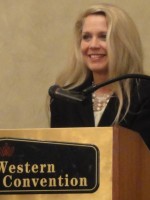
6353664 - CopyChristina Ryan Claypool is a past two term board member for the former Ohio Coalition against Sexual Assault. She has been featured on Joyce Meyer Ministries and on CBN’s 700 Club. Her book, Seeds of Hope for Survivors for everyone who has ever been brokenhearted, addicted, or a victim is available on www.amazon.com. Her website is www.christinaryanclaypool.com.

June weddings, anniversaries, and children

Bride and Groom Cake TopperHistorically, June was the month when most people wed, and there are some interesting reasons for this. “During medieval times a person’s annual bath… usually fell in May or June, meaning that June brides still smelled relatively fresh…but just to be safe, brides carried a bouquet of flowers to hide their body odor.” This informative fact is from the website for the Topeka and Shawnee [Kansas] County Public Library. Another reason in the past for the popularity of June weddings from a Huffington Post blog by destination wedding planner, Sandy Malone, is that “the tradition dates back to the Roman times when they celebrated the festival of the deity Juno and his wife Jupiter, who was the goddess of marriage and childbirth, on the first day of June.”

“On a practical note, others chose June in order to time conception so births wouldn’t interfere with harvest work,” the same Topeka library reports. It’s not very romantic to think about smelly summer brides or babies scheduled around a farmer’s calendar, but weddings continue to be planned to allow newlyweds and their families to arrange work vacations.

Now days, Malone finds that even destination weddings occur almost as frequently in most summer months since there are reduced rates available in the off-season. As for 2014 statistics, it appears June (15%) is still the most popular month, but October (14%) is a close second from www.prnewswire.com. May through October are all strong months, with December gaining ground. But I admit that having a June wedding myself fourteen years ago, found me nostalgically reminiscing about the life-changing event that a wedding is. After all, wedding anniversaries serve as a tangible reminder of the love story that two people share. Even the most unromantic of folks would have to admit that reliving the beginnings of their relationship can rekindle the wonder of how they found their way to each other out of all the human beings in the world.Bride bouquet

Yet the day-to-day grind, hectic schedules, and trying to constantly share, can leave even devoted soul-mates perplexed at the concept of doing life together. In many ways, perhaps, this is why statistically speaking, marriage is on the way out. That part about, “Until death due us part” has lost its luster for younger folks who see how poorly those of us of former generations have done it as indicted by the divorce rate. “After decades of declining marriage rates and changes in family structure, the share of American adults who have never been married is at an historic high,” reports a September 2014 column from the Pew Research Center. Specifically, they cite about one in five adults over 25 equating to 42 million American adults as having never married, although they frequently marry later. The opinion about “the role marriage plays in society” is a vital factor as Pew Research also finds, “…with young adults much more likely than older adults to say society is just as well off if people have priorities other than marriage and children.”

Still, children are being born, and experts say that they fare better when they live with parents who are married. “Children raised in intact families have, on average, higher academic achievement, better emotional health, and fewer behavioral problems,” states www.familyfacts.org. Other websites also confirm that married parents are usually at an economic advantage, and have more time to spend with their children. It appears whatever month a wedding occurs in, it is more than a union between two people. It is also about their offspring, extended families, and society in general. That’s why a wedding anniversary is such a milestone. It is a statement of celebration and hope.

Larry & Christina If we do make it anniversary after anniversary, there is an incredible reward in having someone know us better than anyone else. Hopefully in also having that same someone in our corner during the rough times and celebrating the good times. Marriage isn’t anything like a romantic novel or movie, which creates unrealistic expectations. Admittedly, it would be pretty impossible for an ordinary man or woman to live up to the leading characters in a Nicholas Sparks’ film.

Love isn’t movie-script predictable. It’s always a risk, and sadly divorce can happen to anyone, rendering emotional heartbreak. Yet hearts heal, and anything worth very much in this life is generally a risk, but some risks are worth taking. That’s why an anniversary can be a wonderful reminder of the miracle of real love!

Christina Ryan Claypool is a freelance journalist and inspirational speaker. Contact her through her website at www.christinaryanclaypool.com.


The secret obsession of a refrigerator detective

You should never judge a book by its cover, but is it possible to judge a person by their refrigerator? For example, when you open a refrigerator, you can usually tell if it belongs to a domestically challenged individual, an aspiring chef, or a family with five children. As for the five children, hopefully their refrigerator would be stocked with all kinds of edibles, a couple gallons of milk, and no cold pizza in sight. After all, if there are any teenagers in the clan, the pizza would be consumed in one sitting, with several siblings fighting over the last piece.

If there is a self-proclaimed chef in the house, in the fridge there’s usually an abundance of fresh fruit and vegetables with uncooked meat ready to be prepared. A man or woman who enjoys cooking might even have some tasty leftovers on hand, that they could transform into a delicious meal when an unexpected visitor stops. Then there is the person who never cooks, whose refrigerator contains white boxes stained with soy sauce from Chinese take-out or half-eaten meals from Bob Evans. I really like these people, because they make me feel that being domestically challenged is not the worst thing in the world. So, I’m not Rachel Ray, I can still make a pretty mean meat loaf.

However, it’s not the inside of the refrigerator that tells the real story. It’s the outside that helps you discern what the refrigerator’s owner or owners are all about. There are exceptions, as some individuals are either too young, transient, or minimalistic, to realize they can share their entire life story with magnets, treasured photos, important phone numbers, and inspiring quotations. Refrigerator magnets 1Once I realized the significance of refrigerator decorations, I must admit it was easy to become a bit obsessed. For example, people get a little uncomfortable when they are giving you a tour of their home and you stop dead in your tracks inspecting their refrigerator door. It’s usually best to do a little investigative reporting and get them involved in your quest.

Just ask a doting grandmother about the photo of the little boy or girl that is held in place by a smiley face magnet. You’ll find out more about that child than you ever wanted to know. The proud grandma might even point out the school paper bearing an A and a star, or the scribbled image of some unknown object that this same grandchild painted held in place by another magnet. Just nod agreeably when she explains that they were unaware of this artistic gifting in their bloodline. If there are numerous children’s photos everywhere, it’s best not to ask unless you have a lot of time. List of MedicinesThe phone numbers and lists on the refrigerator door can even provide some insight into the medical issues of an elderly relative or friend. In explanation, people experiencing a health crisis will often have all their resources attached to the fridge. Phone numbers for physicians’ offices, rehab services, clinics, and even medication times might be posted. As for the refrigerator’s magnets, they are sometimes gifts. Therefore, you have to find out if they really define the owner’s personality. There are also those artistic individuals whose refrigerator doors closely resemble the countless badges worn by a proud Eagle Scout.
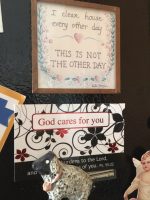

There are humorous magnets like “I clean house every other day, but this is not the other day,” or “Hand over the chocolate, and no one will get hurt.” I am a firm believer that there is truth buried deep within this kind of humor. However, it’s the magnets bearing a faith-filled quotation that can define a person’s belief system. Many refrigerator doors are adorned with encouraging statements like, “Love bears all things.” You can’t help but wonder how many trials of faith these magnets have weathered, especially when they appear to be yellowed or cracked from age.Refrigerator magnets

Speaking of faith, it was an inspirational Facebook post quoting famous author, Max Lucado, that made me think it was time to confess my refrigerator sleuthing. It said, “If God had a refrigerator, your picture would be on it….Face it, friend. He is crazy about you.” The post made me smile, so I hope it will make someone else smile too.  In the end, maybe you shouldn’t judge a book by its cover, but lately I’ve come to believe that you can find out a lot about a person by their refrigerator.

Christina aloneChristina Ryan Claypool is an Amy-award winning freelance journalist and inspirational speaker. Contact her through her website at www.christinaryanclaypool.com. She is also a Chicken Soup for the Soul contributor.



Advice for Ministry


Jeremiah 29:11 & 13
My humble advice about ministry: God bless your heart for wanting to reach others. As for advice, pray for open doors, and then when God opens them be willing to walk through them if you sense God’s leading. Even though, they are not the doors you expected to open or wanted to open.
Many times, it will not be like you think. Try to stay humble no matter how people treat you. Good or bad. Try to stay grateful to God.
If you have a family, put them first. This of course, is first after God. Ministry can become more important than your family, and this is something God would never want.
Don’t worry about what other people think of you, but worry about what God thinks of you. When you feel that He is telling you to say, “No,” have the courage to do that too. Don’t let ministry push out a relationship with your Heavenly Father.
Always, love and forgive His people even when they hurt you. This is what He would want, but don’t allow them to abuse you. Shake the dust off then.
Take care of yourself, eat right, rest, and remember to have fun. There will be times you will be at the top and other times at the bottom. But it’s not about you, it’s about Him. Give God the credit and praise always, and rest in Him during times of failure and loss.
Never forget to pray, spend time apart, and to love God more than anything. Remember you’re not alone, He is with you even when you feel forsaken, misunderstood, and undervalued. You are loved, not for what you do, but because you are His!

Recovery: The Art of Repurposing Lives

My mother had an artistic ability to make everything beautiful. For instance, once with half-a-dozen children loaded in her old car, she spied a treasure in the trash about a block from our home in Lima. Mom gasped with pleasure at the sighting, but I was sure the old bookshelf had seen better days. Not to be denied, she marched up to the front door of that house and asked the elderly female owner if she could have the bookcase.

BookshelfThe dark wood was heavily marred with scratches, and it didn’t look like much of a prize. In those days, Old English furniture polish was the standard cure for distressed furniture, so Mom doused the entire shelf in the dark liquid. Almost magically, it seemed to breathe new life into the discarded antique. When the wood dried, she found a lace dolly that covered the deep gouges on top, and then filled the shelves with books and glassware. Even though I had seen her do it countless times, once more this resourceful woman created something of beauty out of second-hand junk.

Back then, we didn’t use terms like: repurpose, refresh, restore, or reinvent. There was no category of household items or furniture known as Shabby Chic or vintage, or stores filled with repurposed products. If something was used, it was simply that, “used.” It was to be looked down upon, rejected, or devalued.

We can devalue others too, overlooking the fact that the art of repurposing isn’t just about old furniture or broken jewelry. Rather it’s about putting back together the pieces of people’s lives that have been shattered by addiction. After all, it’s easy to look at individuals making poor choices, and to believe they are past societal or even spiritual redemption. Addiction is complicated, whether it is heroin, prescription painkillers, countless other drugs, or even alcohol. Since the battle with heroin began, many folks have forgotten that although alcohol consumption is legal, it can still be a dangerous substance if abused. For example, alcohol remains a contributing factor in divorce, domestic violence, and in 40 percent of violent crimes.

Headlines and nightly TV news stories tell us the harrowing tales of the wrongs committed by individuals plagued by substance abuse. There are murders, robberies, fatal car crashes, and overdoses that paint the picture of people whose lives are out of control. But that’s not the whole picture. Whatever the addiction, we can cast off these struggling human beings and offer them and their loved ones little hope for restoration forgetting that recovery is always possible. Celebrities including: Robert Downey Jr., Eric Clapton, Samuel Jackson, and many others have overcome drug addiction. Even the most lost and hopeless of cases can turn into the greatest advocates for change when provided with a fresh start.

Yet this is not a rose-tinted philosophy requiring little effort. Increased funding will have to be continually allocated to addiction and mental health issues, along with ongoing education to know how to better serve this at-risk population. Long-term affordable treatment centers, recovery programs for those incarcerated, and family support networks will have to be established. More twelve step recovery and faith groups will be essential, but prevention among the young will be key. In this recovery fight, there are those on the frontlines who deserve our gratitude for their dedication. Mental health professionals, law enforcement officers, court system employees, first responders, and medical personnel who are daily confronted with the first step in the plan to save lives. Also, twelve step leaders and courageous recovering addicts who share their powerful testimonies in hopes of preventing others from walking the treacherous path of addiction.

Our nation’s heroin epidemic took most of us by surprise, and we are still reeling from its existence. Yet burying our heads in the proverbial sand won’t make it go away. That’s why we should support those on the frontlines, and equip them with whatever assistance we can provide, while wrapping our arms around the families that have been wrestling with a loved one’s addiction in whatever way possible.

Key NecklaceThankfully, my mother’s lesson about reclaiming the vitality of a cast-off item stayed with me. That’s why not long ago, when I found a large rhinestone and silver-plated key at a church sale, I had to buy it.

I had no idea what to do with the sparkling key, but then I happened upon a necklace that had lost its own pendant. The key fit perfectly on the long silver chain, but it still seemed incomplete. I added a few more gems including: a miniature heart with a mustard seed, and a silver charm from a broken bracelet engraved with the words from Scripture, “If you have faith so small as a mustard seed, you can say to this mountain, ‘Move from here to there’ and it will move. Nothing will be impossible for you.”

Writing this column is having faith in the impossible. My mother taught me another lesson. When you don’t know what to do, do something. So I’m writing another recovery column, hopeful that keeping the conversation going is a way to fight back. For now, may we all take “one day at a time,” and work together to find solutions by rejecting apathy, refusing to give up, and reclaiming our communities one life at a time.

Christina Ryan Claypool is an Amy and Ohio AP award-winning freelance journalist and inspirational speaker. Contact her through her Website at www.christinaryanclaypool.com.

The Danger of Distracted Driving

Highway at nightI recognized the small truck right away. The logo on the vehicle’s door represented a local company that I respected. One that I had done business with in the past. Driving next to the pick-up on a two lane highway outside of town, we were stopped by a red light in adjacent lanes. The sun had set over an hour earlier. Even though it was dark, the light from a cellphone clasped in the hands of a young female driver illuminated the truck’s cab. Her long hair obscured most of her face, because she was glancing down glued to her cellphone screen instead of the road in front of her. Not only that, but when the light turned green, mesmerized by a text or Facebook post, she didn’t move.

After driving about a half mile down the 50 mph highway, I looked in my rearview mirror concerned that she would get hit from behind. The mother in me frantically wanted to warn her to start moving. Thankfully, she finally did. At the next red light, it happened all over again. The distracted girl remained oblivious to her surroundings engrossed in the phone. A second time the truck sat still when the light turned green. This time when I glanced back, the mother in me wanted to take her car keys away.

As a nation, we are justifiably concerned over the possibility of another terrorist attack. Yet in all probability, it’s a driver more interested in their iPhone than safe driving practices that could contribute to our demise. A September Wall Street Journal article reported that traffic fatalities surged 14% (NSC statistics) in the first half of 2015 blamed on more drivers, cheaper gas, catastrophic weather, etc. But famed Berkshire-Hathaway CEO Warren Buffet says that he believes distracted driving could be an “overlooked contributor.”

In reality, we have no idea how many auto collisions occur annually due to our addiction to our phones, especially with the invention of the Smartphone. According to a USA Today article last year, “Cellphone use causes one in four car accidents” by Gabrielle Kratsas. “The [2014 edition] of National Safety Council’s annual injury and fatality report, “Injury Facts,” found that the use of cellphones… [caused] 26% of the nation’s car accidents, a modest increase from the previous year.”

Although this report doesn’t include all the incidents where drivers did not divulge that they were on their phones. For example, can you imagine anyone reporting, “I was on my cellphone not paying any attention when I plowed into your vehicle.” Nor did “Injury Facts” name texting as the primary culprit, since in 95% of the cases investigated, drivers were using hand-held or hand-free cellphones.

Fourteen states currently ban hand-held cellphone use while driving, but Ohio is not one. If we are honest, most of us have difficulty doing more than one task at a time. Especially, when that task involves use of a cellphone while travelling 70 plus miles an hour on the interstate. It’s not just at high rates of speed either. How many times have you been stopped at a red light when you observe a preoccupied motorist like the girl in the company truck? It’s even more frightening to be moving along and spot another driver’s neck in the downward dog yoga position fixated on their phone.

End of Road signNot long ago, driving a car was a privilege that came with weighty societal responsibility. Today, young drivers are at increased risk due to their lack of experience. The CDC reports that “they have the highest proportion of distraction-related fatal crashes.” But older drivers are guilty too. Distracted driving includes: cellphone use, texting, applying makeup, programming a GPS, eating, arguing with a passenger, etc. The U.S. Department of Transportation reports that, “In 2013, 3,154 people were killed in crashes involving a distracted driver…an additional 424,000 people were injured.” If you’ve ever fought your way back to health following a serious wreck, you realize that those numbers represent countless individuals whose lives have been severely impacted by someone else’s possibly careless behavior.
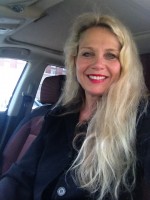
We all want to use our Smartphones, so many of us are contributing unnecessarily to the problem by looking the other way. There are Ohio laws against texting, but the National Safety Council advises folks who want to be part of the solution to “Support Cellphone distracted driving legislation… for bills banning cell phone use-handheld and [even] hands-free-while driving.” This might seem a little drastic, but what would be a good solution to stop distracted driving?

Christina DrivingChristina Ryan Claypool is an award-winning freelance journalist and inspirational speaker. Contact her through her website at www.christinaryanclaypool.com. 

Finding purpose in life

It was one of those phone calls that you don’t expect to get. No, it wasn’t a middle of the night crisis, rather an early morning candid confession. “I don’t have a purpose anymore,” said my elderly friend with desperation.

In reality, there were still community events for her to attend, and restaurant lunches or suppers with friends. But there were no longer children to raise or even grandchildren to fuss over. Everyone had long ago grown up and moved away. My aging acquaintance’s body stubbornly refused to allow her to work or even volunteer for all the causes she had once so passionately supported. Quite simply, the fragile widow was searching for a reason to get out of bed each morning.

It is part of the human condition to seek fulfillment through what we do. “The two most important days in life are the day you are born and the day you discover the reason why.” This quote is from renowned humorist and author Mark Twain. Twain died over a century ago, but his wise observation remains relevant.

Probably, the most well-known book ever written specifically about the subject is “The Purpose Driven Life” by Pastor Rick Warren. Originally released in 2002, the book had sold over 32 million copies by 2012 when it was reissued in an updated anniversary edition. Publishing experts never predicted this widespread success. The book’s subtitle, “What on Earth Am I Here For?” echoes Twain’s assertion. Apparently, learning the “why” of our existence continues to be a pivotal question for most people.

Besides, for much of the time we spend on this earth, we have defined roles. As a child we discover the world around us, and then assume the job of learning as students. We eventually find a career in the professional realm, and some folks embrace the awesome responsibility of becoming a parent.

Our days can be filled with mundane duties and tedious tasks that bear little resemblance to the lofty dreams of youth. It’s then we can experience burnout or become very disillusioned, which can result in a midlife crisis.

The Urban Dictionary online defines a midlife crisis as, “When a person regrets how they have lived his or her life, and they attempt to ‘correct’ their mental issue in a variety of ways which usually always harms themselves or those closest to them.” The satirical website says those “harmful” decisions could include buying an expensive convertible, or getting divorced. Society pokes fun at folks having a midlife crisis, since they are desperately trying to hold onto their youth.

Life is a journey, and we are all at different places along the pathway. “We may run, walk, stumble, drive, or fly, but let us never lose sight of the reason for the journey, or miss a chance to see a rainbow on the way,” according to songwriter Gloria Gaither.

We don’t want to rush through our days missing the precious moments that need to be cherished. Yet it’s good not to get too comfortable, because often our purpose changes dependent upon the season of life we are in. When things don’t work out the way we have planned, that’s when a wise individual reinvents themselves to discover meaning in each new stage.

Even in unexpected tragedy like Rick Warren’s family experienced in 2013 when his 27-year-old son Matthew committed suicide after a lifelong battle with mental illness. In the past two years, the famous minister and his wife Kay, have become a highly visible force in the field of mental health awareness and suicide prevention. Within the national faith community, they are now championing churches to reach out to those individuals struggling with mental health issues.

Often it is our life circumstances that are the most difficult that result in new direction. The “why” we are here changes, and we have to adapt. Similar to society’s recent trend to repurpose everything from old furniture to broken jewelry, we have to pick up our own shattered pieces and figure out how to make something beautiful out of them.

No matter our age, if we are still on this Earth, there is more for us to do. Like my friend who was panicking because she no longer felt that her existence had meaning. I wish I was an early morning thinker, because in that instant I could have reminded her, “For everything there is a season, and a time for every purpose under heaven.”

Christina aloneChristina Ryan Claypool is a freelance journalist and inspirational speaker. Contact her through her website at www.christinaryanclaypool.com.

The Memory of a Christmas Eve Miracle

Christmas Dining TableIt’s Christmastime again! Everywhere you look there are festively decorated store windows, Christmas commercials about joyful family gatherings, and music that floods us with memories of long ago holidays. Yet for many folks, there is also the longing for yesterday that this season can create. Vacant places at the table where deceased loved ones once sat, or maybe an empty table resulting from a family that’s been broken, or just grown and moved away.

There is also the financial burden for economically struggling individuals not knowing how they will make ends meet, let alone having anything left over for their children’s Christmas list. After all, children don’t understand that their circumstances are not conducive for a visit from Santa.

My late friend Liesl Sondheimer asked me for my help in sharing her own miracle of holiday provision, but for her it was a Hanukkah miracle. To explain, sometimes the two religious celebrations intersect, as they must have that December almost 75 years ago. Liesl was a Jewish Holocaust survivor who lived in Lima, Ohio for six decades. After fleeing from Germany in 1938, the Jewish immigrant began life anew, but most of her extended family perished.

It was a decade ago, when Liesl’s 97-year-old arthritic hands prevented her from writingphoto (13) the inspiring story herself, so I typed it down while she dictated. The small of stature, silver-haired survivor began, “…Although my husband was a physician in Germany, we were forced to flee from our home to seek refuge in the United States because of the rise of the Hitler regime. We recently had arrived in this country from Nazi Germany. At the entrance of the dilapidated apartment building that was to become our home, my two little girls asked, ‘Will we get any Hanukkah gifts this year?’ I had to tell them there was no money for gifts when we were not able to even provide for the most necessary things.

“On Christmas Eve, there was a knock at the door,” Liesl continued. “The janitor handed me packages with clothing and toys for the children, food, and a little Christmas tree. Asking who the kind donors were, the janitor would only tell me some people had overheard our conversation and did not want the children to go without gifts this holiday season. They did not even want us to know their names.

“How blessed it is to give, so much easier than to receive,” concluded the elderly Jewish lady. “My financial circumstances improved and I was able to be able to be on the giving side the rest of my life. However, I will never forget how wonderful it was to receive goods, warmth, love and encouragement while struggling in poverty. It keeps up one’s faith in the goodness of man.”

As I typed the account of the long-ago random act of kindness, it was Liesl’s assertion of her steadfast faith in the “goodness of man,” that has always intrigued me. Especially, since Mrs. Sondheimer’s words echoed that of the 18th century German poet Goethe whom she deeply admired, “Noble be man, merciful and good.”

The compassion of other human beings is something that most of us desperately need to be reminded of right now. With nightly news broadcasting horrific features about the cruelty of individuals involved in terrorist attacks, school shootings, and ongoing racial tension in metropolitan areas, we can forget about all the giving folks trying to make the world a better place.

Christmas Tree 2015Besides, at Christmastime, we frequently witness the very best in people. The countless law enforcement officers making sure local kids have gifts to open; the churchgoers everywhere who collect thousands of shoeboxes filled with little blessings for impoverished children overseas; the service clubs, ministries, and organizations working diligently to fill the gap for parents through local programs or through Angel Tree and Toys for Tots; the Salvation Army volunteer bell ringers grateful for each dollar donated; the school personnel and families secretly giving to those in need among them; and the list goes on and on.

Mrs. Sondheimer refused to allow her once painful circumstances to make her bitter. Rather, she chose to celebrate the memory of a holiday miracle when her family was cared for by strangers. It might help to remember that the reason for the season was never about festively wrapped gifts anyway, but about a baby born in a humble Bethlehem stable offering mankind the gift of God’s love. In closing, Merry Christmas and a very Happy New Year to all!

Christina aloneChristina Ryan Claypool is an Amy-award winning journalist and inspirational speaker. Contact her through her Website at www.christinaryanclaypool.com

Supporting the American Dream

white wickerIt begins with a dream. Then you add venture capital probably equating to all the money you have, plus borrowing from a host of other sources. You add heart and soul, and more courage than most people could ever imagine. After that you work grueling hours on a daily basis, and finally you end up with a small business. “Forty percent of consumers say they will seek out small businesses to support their community,” wrote David Chaverns, CEO of the Newspaper Association of America in a recent editorial. In my own heart, I have a special place for aspiring entrepreneurs, because I was once one of them. Like approximately 70 percent of small business owners, my former resale store in Lima, Ohio, was a sole proprietorship. “A sole proprietorship is basically an unincorporated business owned and run by one individual (no partners are involved)…,” according to Caron Beesley in a 2013 Small Business Association blog post.

“Someday, I’m going to have a store when I grow up,” I absentmindedly told my grandmother when I was a little girl.  I didn’t remember this significant statement, until I was a thirty-something single mom working 12 hour days and up to my eyeballs in debt in my own retail establishment. Grandma, who was the store’s employee of the month every month, because she worked for free, reminded me of my childhood vision on a particularly discouraging day. What I do vividly remember is my first experience with another store proprietor. The middle-aged lady was a family friend who owned an antique shop in my hometown. When I was about 11-years-old, the generous owner allowed me to choose a gift from some of the more moderately priced collectibles in her inventory.

For a couple hours, I walked up and down the crowded aisles of the shop contemplating which treasure to select. At first, she and my grandmother seemed amused by my indecision, but then they both grew impatient. Still, everything looked extraordinarily beautiful, because the colorful glass items sparkled in the sunlight of the store’s windows. To their relief, I finally picked a ruby red vase to take home with me. That vase started what eventually became a collection of ruby red glass, but more importantly, I had been bitten by the small business bug. For me, being a shopkeeper became my idea of the American dream. Besides, I had been raised in a family of small business owners.

Shopping Good FridayIn 2010, to raise awareness American Express came up with the idea to create Small Business Saturday, which has become an annual event celebrated on the Saturday after Thanksgiving. “The 28 million small businesses in America account for 54% of all U.S. sales,” reports the Small Business Association website, but they need our support all year long, not just on one day. Although this column isn’t an indictment of big box stores, because sometimes our budgets necessitate shopping based solely on price or availability.

Yet my version of the American dream was the ability to own and operate a vintage/thrift shop, and I was blessed to fulfill that vision. In 1931, James Truslow wrote that his idea of the American dream was “that dream of a land in which life should be better and richer and fuller for everyone, with opportunity for each according to ability or achievement.” These words are found in his book, “The Epic of America.” The www.investopedia.com definition is “The belief that anyone, regardless of where they were born or what class they were born into, can attain their own version of success…The American dream is achieved through sacrifice, risk-taking and hard work, not by chance.”

At the end of our lives, for most of us there will be opportunities that we will be grateful for, and missed opportunities that we will regret. Although I never became rich owning a resale shop, I will be forever thankful that I was once part of the small business community. My little store started with a leap of faith, and ended almost seven years later with an unceremonious “Going out of Business Sale.” Still, the memories of my wonderful customers, and the countless lessons learned there cause me to never forget the small business owners striving each day to live their own American dream. Whenever financially possible, let’s show these hard-working citizens our support, and keep this dream alive for generations to come.


The Healing Power of an Apology for a Wronged World War II Vet

Whenever Veteran’s Day draws near, I am reminded of the story of Samuel Snow who believed an apology was important enough to wait more than six decades to receive one. In July of 2008, a then 84-year-old Snow traveled across the nation to accept a formal apology and an honorable discharge from the United States Army. According to media reports just hours later, the World War II veteran from Leesburg, Florida, died in a Seattle hospital.

“My dad has been standing in formation all these years, waiting to have his name cleared. With the Army’s honorable discharge, he was at ease…and he went home,” said Ray Snow, son of the late soldier in a released statement after his father’s death.

In 1944, Samuel Snow was one of twenty-eight black soldiers wrongly convicted of rioting charges resulting in the death of an Italian prisoner of war. In his book, On American Soil: How Justice Became a Casualty of World War II, author Jack Hamann pointed to “serious flaws” in the prosecution of the case. According to Seattle Times staff reporter, Sandi Doughton, “Hamann championed the cause of the black GIs. His investigation cast suspicion on a white military policeman, now dead, as the prime suspect in the murder of the Italian soldier.”

After Snow’s conviction, he spent 15 months in a military prison and received a dishonorable discharge, which greatly altered his life opportunities. Upon his release, the African American soldier returned to a then segregated Leesburg, and his “dishonorable discharge” became a sort of “death sentence” according to Ray Snow. The senior Snow could only find work as a janitor or handyman following the scandal, but he was a man of deep faith who refused to grow bitter. Although his son who became an elementary teacher in Leesburg said that it became his father’s “mission” to obtain official documentation regarding his innocence.

This tragic tale points to the significance of an apology. Sadly, the ability to admit wrong in life’s lesser matters than the grievous offense Snow suffered has been radically altered by our progressively lawsuit happy world. To explain, blame seems to be readily pronounced in our society, despite motivation or intent in many situations. That’s why fear can keep an individual or organization from assuming responsibility for a mistake or error, because it could result in life-altering financial or professional consequences. Still, a sincere request for forgiveness can be an influential tool in mending any rift. Besides validating the offended party, it can also set the perpetrator free of the guilt that wrongdoing intended or unintended can create. Yet when the words, “I’m sorry,” are said, it appears to matter a great deal how they are delivered.

That’s why the method we use to apologize can contribute to whether the apology will be accepted according to the classic book, The Five Languages of Apology. Co-authored by Dr. Gary Chapman who also wrote the New York Times bestseller, The Five Love Languages, the book’s cover explains that, “Sometimes, saying, ‘I’m sorry’ just isn’t enough.” Chapman and co-author Dr. Jennifer Thomas believe that there are people who have been wronged who need to hear the offender not only confess regret, but also accept responsibility for their actions. Along with accountability, there is the act of “making restitution” by asking, “What can I do to make it right?” This might also be necessary, if it is the injured individual’s language of apology according Chapman and Thomas.

For Snow, a 2002 verbal apology by an Army major general just wasn’t enough. That’s why the elderly man traveled from his Florida home to Seattle with his son in July 2008 to attend the ceremony honoring him and the 27 other falsely accused GIs posthumously, because all but one other soldier had died. Snow refused to let questionable health prevent him from making the historic trip. Unfortunately, the aged veteran was hospitalized in Seattle and unable to attend. His son went instead. Returning to his dad’s hospital room, Ray presented his father with the framed honorable discharge from the ceremony. Reports say the falsely convicted man held the official plaque in his arms, clutched it to his heart, and smiled. With his dignity finally restored, he died just hours later. Like every dedicated soldier with his mission accomplished, I’m hopeful that Samuel Snow is now resting in peace enjoying a hero’s reward. But I wish I could extend the same gratitude to him that every military man or woman deserves to hear, “Thank you for your service!”

Christina Ryan Claypool is a freelance journalist and inspirational speaker. Contact her through her website at www.christinaryanclaypool.com