‘HOPE’ Update: My One Word for 2014

As the  calendar turned to January 1, I felt the gentle nudge of God’s Spirit encouraging me to choose, ‘Hope,’ as my word for 2014. It was no coincidence, that while ringing in the new year, hope was something I desperately needed myself, since I was battling depression resulting from a health crisis. Circumstances, which I initially had no intention of sharing with others. However, our Heavenly Father’s plans for us are often very different from our own.Jeremiah 29:11 & 13

This was the first time, I had ever participated in selecting a word  for the year.  Picking it was easy though, as it seemed like God had chosen it for me. I tell the story of how this came about in my blog titled, “A Postcard’s Reminder of Hope.” Here’s the link if you’d like to read the post: http://christinaryanclaypool.com/blog1/2013/12/31/a-postcards-reminder-of-hope-for-the-future-by-christina-ryan-claypool/

It was this Godwink of a postcard with a rainbow and the verse, “For I know the plans I have for you,” declares the Lord, “plans to prosper you and not to harm you, plans to give you hope and a future,” (Jeremiah 29:11 NIV), that began to restore my own expectancy in God’s good plan. Since then, it seems like I see the word, ‘hope’ everywhere.

It almost jumps off the page, sometimes, when I’m reading the Bible. At other moments, I hear the promise of hope coming through song lyrics. An example would be for King & Country’s tune, “Crave.” One line of the song says, “Hope is what we crave, that will never change.” What has changed for me, has been the renewed vision in our Creator’s desire to do good on our behalf, along with His ability to bless our lives and to use us despite physical limitations, aging, or our own inadequacies. This was a catalyst for the depression I was experiencing, falsely believing that I was no longer of any value to God’s dynamic kingdom.

There was another gentle nudge of the Spirit, which resulted in me finding the book, One Perfect Word  by Debbie Macomber in a thrift store recently. Out of the thousands of books there, it just stood out as something I needed to purchase. When I got home and began to read it, I found out that Mrs. Macomber had chosen ‘hope’ for her word of the year in 2006. It was such a joy to glean wisdom from this talented writer’s insights, not only about hope, but also about the importance of selecting a word for each new year. Something she has been doing for a very long time.

I’m just starting my own journey of finding significance through a word for the year. It’s only April, and already, I’ve learned more about ‘hope’ than I could have believed possible. I’m optimistic about the future again, and busy finishing a new book. For now, I would like to close with another line from ‘Crave,’ “It’s written on my soul hopes what we crave.”

Here’s the complete song: http://m.youtube.com/watch?v=GrXLXVL_0AE
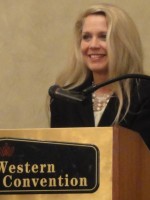
6353664 - CopyChristina Ryan Claypool is the 2011 First place national Amy award winning freelance journalist and a Christian speaker. She has been featured on Joyce Meyer’s Enjoying Everyday Life TV show, and on CBN’s 700 Club. Her website is www.christinaryanclaypool.com.  

***************************************************************

Circles of Faith, Founder and Executive Editor, Elise Daly Parker, posted “My One Word for the New Year Update and LinkUp”. Go to their website at www.CirclesOfFaith.org to read Elise’s blog post and to hear an update from other women about their inspiring One Word journeys including: Kimberly Amici, http://kimberlyamici.com/ who is the Circles of Faith Co-Founder and Managing Editor, Holly Barrett whose Website is http://hollybarrett.org/, and Laura Roth who blogs at:  http://www.laurarath.blogspot.com/  This Circles of Faith post encouraged me to write my own update.

Happy 55th Birthday to Barbie

Barbie will turn 55 on March 9th and this year she’s getting more press than ever. Maybe that’s because the iconic Mattel doll made the cover of the Sports Illustrated swimsuit issue recently.

Although I wasn’t happy about the magazine cover, I do have wonderful Barbie memories. As a young girl growing up in a large financially-struggling family, there wasn’t any money for Barbie outfits. That’s why I vividly recall the delight I experienced when my mother sewed an entire wardrobe for my blonde Barbie on her old Singer Sewing machine. A silver brocade gown was my favorite.

The timeless doll was originally created in 1959 by Ruth Handler, who along with her husband Elliot founded the Mattel Company in 1945 in their garage. According to www.mattel.com, Barbie quickly propelled Mattel to the “forefront of the toy industry” and by 1965 their sales were more than $100 million. In the meantime, Mattel also created the Ken doll in 1961 to serve as Barbie’s one true love.

The idea for Barbie was birthed through the paper cut-out dolls that Ruth’s daughter, who was named Barbara, enjoyed playing with. Just like Barbie, who was named for the Handler’s daughter, Ken was named for their son. Barbie’s friends, the Midge doll (1963) and Skipper (1965) were also added to the line. In 1968, Christie, Barbie’s African American friend was introduced. The company’s website reports that Christie was the “first of many ethnic friends of Barbie, which …include Theresa (1988) and Kira (1990) Barbie Latina and Asian friends.”

Who would have guessed that fifty-five years after her introduction, Barbie would still be inspiring young girls and adult collectors everywhere? Barbie products have included everything from dolls and accessories to jewelry, eyeglass frames, pillows, backpacks, digital items, and even McDonald’s Happy Meal packaging.

For many of us, Barbie has been part of our own history as women. About five years ago, the Mattel doll became even more personal for me. This was due to an elegant woman named Reggie who I met on a cruise ship. This was my one and only cruise, since I spent the whole time being seasick. The sixty-something female accountant practically gushed when she told me that she once represented Mattel’s Barbie to Toronto stores. I was seated next to the blonde French Canadian every night for supper, a meal which I valiantly tried to keep down. We were from different countries, but Barbie had somehow worked her way into our collective hearts. We giggled like school girls as we discussed the doll’s early days and her unprecedented success in the toy market with both of our husbands looking on in quizzical dismay.

Feeling nostalgic, that Christmas I bought my then four-year-old niece a Barbie to start her own collection. However, when I arrived with the present, I found my little red-haired relative carelessly clutching an already naked Barbie who was having an obviously bad hair day from being drug around.

After all, it hasn’t been smooth sailing for Barbie. For example, some folks are deeply concerned about her unrealistic dimensions. The fashion doll’s measurements vary on Internet websites, but would be an approximate 39/36-18/16-33 if she were a real person. Talk about a catalyst for eating disorders and low self-esteem, since young girls and even older females have a difficult enough time accepting their flawed bodies without being faced with Barbie’s unattainable role model.

Adding the plastic doll to the other models being sexually objectified by Sports Illustrated hasn’t helped either. In explanation, “Swimsuits (and unrealistic body images) were never the same after the first doll rolled off the assembly line in 1959 and this is, after all, Sports Illustrated’s 50th anniversary swimsuit issue..,” according to Cindy Boren in a Feb. 18, 2014, Early Lead column in the Washington Post.

After fifty-five years, I do wonder if the female race is better for having known her. For more than five decades, our own body images have been sabotaged by a doll, with an unattainable perfect build that never wrinkles. But we can’t blame Barbie for all of this, or can we?

Apparently, last year’s sales statistics portrayed a decline in Barbie’s popularity, too. In a July 2013 AP article by Mae Anderson for the Associated Press the headline read, “Mattel’s Barbie Sales Plummeting While other Girls Brands Climb.” Maybe that’s why, desperate marketers put her on the cover of a men’s magazine last month.

Well anyway, “Happy 55th Birthday, Barbie!  I still love your perfect little self and treasure my memories, but only time will tell, if you’re here to stay.

Christina Ryan Claypool is a freelance journalist and an inspirational speaker. Contact her through her website at www.christinaryanclaypool.com.   

America’s Favorite Four-Letter Word

What’s a four-letter word that is music to the ears of the hearer, and brings happiness to the heart of the reader? Clue: the number one definition on www.freedictionary.com is, “Not imprisoned or enslaved,” while the more appropriate number seven meaning is, “Costing nothing, [or] gratuitous.” A crossword buff probably guessed by now, it’s the word, “free.”

Our society loves this term that conjures up the thought of getting something for nothing. In confirmation, when one googles this famous four-letter word, instantly you are confronted with more than 3,290,000,000 references. That’s billions, not millions of related searches including: “free products, free games, totally free stuff, free samples, free translations….” etc. Marketers know what suckers we all are for advertising that professes to give something away.

I learned a lot about this type of marketing years ago, when I was employed as a corporate representative for a large manufacturer that supplied products to supermarkets. Occasionally, on a Friday afternoon when the grocery store was packed, I would stand in a product aisle offering shoppers a generous coupon to buy a comparable item to the one they normally purchased. It was amazing how often brand loyalty could be bought for a couple of bucks. In fairness, there were also those die-hard loyalists who refused to switch no matter how large the coupon.

A column devoted solely to consumer coupon behavior would take on a life of its own, but let’s get back to marketing strategies touting free products. Because even better than a coupon savings of a few dollars, is getting an item absolutely free. Whether, it’s a free gift with purchase, a buy one get one free, a free trial, or free information; buyers often forget that the seller almost always has an ulterior motive.

Most of our parents warned us that there are no free lunches in life. Apparently, not everyone knows this, because an individual named Fidora emailed Yahoo! Answers at www.yahooanswers.com asking, “What is the meaning of this quote, ‘There is no free lunch?’” The consensus of the 10 answers offered was that somewhere down the line there is a cost for everything.

Therein lies the problem. If you don’t think you are paying for something you aren’t too concerned about whether it’s a good deal, or not. To implement the age-old philosophy of Caveat Emptor which is a Latin term for, “Let the buyer beware,” you have to possess a purchaser’s mentality. The American Heritage Dictionary of the English Language explains that Caveat Emptor is, “The axiom or principle in commerce that the buyer alone is responsible for assessing the quality of a purchase before buying.”

After all, like most astute consumers when spending your hard earned cash on an item you want the biggest bang for your buck. But if it’s free, you aren’t worried about a product’s quality. There are naïve buyers born every minute who are enticed by this type of “bait and switch” advertising. Take me, for example. I didn’t think I could lose when I eagerly requested the “free” designer scarf, which accompanied a magazine subscription that I didn’t really need. I could hardly believe my good fortune, until the scarf arrived in the mail about a week ago. It was paper thin and barely fit around my neck. My husband laughed out loud when I showed it to him.

This is just one account of my getting free stuff, which has robbed my budget in the long run. Honestly, I probably wouldn’t have purchased the magazine had there not been a free gift incentive. In my defense, I’m not alone in this behavior, or the word, “free” wouldn’t be everywhere. Yet there are free products that can be helpful. Like a buy one get one free dinner to a restaurant you’ve always wanted to try, or frequently visit. Even then, watch that you don’t spend more on a higher-priced meal, beverages, or desserts than you normally would, while celebrating your free meal.

In closing, I hope it’s ok to share the wisdom that I’ve learned along life’s path.  Remember the old saying, “If something seems too good to be true, then it probably is.” Most free offers are in the too good to be true category. Now, you can take that free advice all the way to the bank.

This blog post originally appeared in The Lima News, and in the Troy Daily News.

Veteran’s Day: Did You Lose that Arm for Me?

Veteran’s Day is upon us, since we celebrate this holiday on November 11th each year. Once again, I find myself at a loss to express my gratitude to those who served or are serving in the military. This gratitude is not new for me, because I grew up in a home with a veteran.

My father is now in his eighties, but an old black and white photo of him as a young Army staff sergeant sits on an end table in his home reminiscent of his own service. It was his example that taught me this deep respect for the men and women of the military.

Twenty-year-old country singer, Scotty McCreery must have patriotic roots that run deep like mine. But honestly have you ever heard of a country artist who isn’t patriotic? Recently, I attended my first ever country concert featuring McCreery who was the Season 10 American Idol winner.  Besides old Idol fans like me and my hubby, McCreery had a following of screaming girls in cowboy boots and rhinestone belts singing along to his hit songs at Troy’s Hobart Arena last month. Personally, the price of the ticket was worth just hearing the performer’s touching tune, “The Dash.”

An already consummate musician, McCreery sat down on a stool and mesmerized the crowd with his lyrics about the true story of a young soldier who was deployed to Afghanistan and never returned to see his wife give birth to his first child, a little boy.

Thankfully, my own nephew, an Army private recently returned safely from a tour of duty in Afghanistan. While he was there I was constantly praying for huge angels to be around him. Sadly, I’m sure that the family of the young soldier McCreery wrote about was praying for the same thing.

While interviewing Lima’s Scott Young, WTGN’s general manager, I found out that as a teenager growing up in Windham, Ohio, he, too, prayed daily for his older brother who was serving in Vietnam. Although his brother returned unharmed, “The little town I was from, we lost five boys in Vietnam,” remembered the well-known radio personality. Young, who has been at WTGN Christian Radio for 35 years, will be featured in my Inspirations column in December’s Our Generation’s magazine.

Like Scott Young’s brother who works in the same Windham area factory where their late father once did, there are countless veterans all around us. Those who served in combat action, and others who sacrificed to protect our freedom during calmer times. According to statistics from the U.S. Census Bureau almost 22 million Americans have been in the military. Of this number, 1.6 million are female veterans.

Sometimes, it’s not easy to tell who is a veteran. It can be the clerk at the gas station, the emergency room nurse, or a farmer in the field who once served our country. There are signs though, like a license plate holder, bumper sticker, or ball cap that boasts allegiance to a specific military branch. My father is one of those U.S. Army ball-cap guys.

Mum Festival 2013 002That’s why I wondered if the young man who I saw this fall at a community festival was a war veteran. He was wearing a military cap, except it was a camouflage hat without any lettering, so I wasn’t sure if he was military or just someone who liked camouflage.

The approximately twenty-something family man was tall and stood almost at attention in his khaki t-shirt. There was one unusual thing; he was minus an arm. He caught me staring at his missing appendage, and for just a moment he appeared embarrassed. I could tell he wasn’t the kind of individual who cared for sympathy, but it wasn’t sympathy I was feeling. Rather, I was obsessively wondering how he had lost that limb. Of course, he could have been in a factory or farming accident, but still I felt this visceral guilt in realizing that he might have lost it defending my freedom.

Since politeness, prevented me from asking, I didn’t get a chance to thank him, if he had been in combat. But how would you thank someone for giving up their arm in your defense anyway? That’s why I wrote this column to possibly express my gratitude to him and every courageous man and woman who have served or are serving to make sure our nation remains the land of the free and the home of the brave.

Thank you and Happy Veteran’s Day!

Christina Ryan Claypool is a freelance journalist and inspirational speaker. Contact her through her website at www.christinaryanclaypool.com. This column originally appeared in The Lima News, Sidney Daily News, and Troy Daily News. 

A Lesson from Morrie: Always live like you’re dying

Last fall, I met my writing idol, Mitch Albom. The famous journalist was the keynote speaker for a Cancer Awareness Symposium held near Dayton, Ohio. Like hundreds of other mostly Ohio fans, Albom signed my copy of his book, The Time Keeper. Then he let my husband snap our photo together, which I promptly posted to Facebook.

It’s increasingly difficult not to see the literary genius of this Detroit Free Press columnist. Albom’s book writing genre was originally sports-related, although several have dealt with spiritual issues. They include “Have a Little Faith” published in 2009, “The Five People You Meet in Heaven,” (September 2003) and 1997s “Tuesdays with Morrie.”  All of which were made into movies.

Mitch Albom, best-selling author with Christina Ryan Claypool, blogger

Mitch Albom, best-selling author with Christina Ryan Claypool, blogger

“Tuesdays with Morrie” continues to sustain popularity probably because it addresses one of the most challenging issues that individuals must face; human mortality. It wasn’t predicted to be a bestseller, but years and millions of copies later and counting, readers have voiced their opinion.

In the book, Mitch Albom and Morrie Schwartz explore the reality of death and the lessons learned in life. For fourteen consecutive Tuesdays, Mitch interviewed an elderly Schwartz; his former college professor who was dying from (ALS) Lou Gehrig’s disease. Albom quotes Morrie as saying people don’t talk about death, because “no one really believes they are going to die.” Admittedly, death can come as a shock when it occurs in our inner circle, because it isn’t supposed to happen to us or to the people we love. Or when we hear of another family’s tragic loss we sometimes feel guilty, because we are grateful that it happened to someone else. So, we hug our spouses and kids a little tighter, hoping to stave off this inevitable grim reaper

It was almost a decade ago, when the question of death began to preoccupy my own thoughts. At the time, I was waiting for the results of a biopsy for a relative who I love more than my life. During those long days of waiting, I tried desperately to busy myself with distracting activities, so I opted for a little “Retail Therapy.” While spending time shopping, I first heard the now classic country tune, “Live Like You Were Dying” being sung by Tim McGraw.

Don’t stone me, but I’m not a big country fan. Yet the lyrics stopped me in my tracks. The song is about a man in his early forties whose medical tests reveal that his time on this Earth will be short. When asked what he did when he got the news, the verse says, “I went sky diving, I went Rocky mountain climbing…And I loved deeper and I spoke sweeter, and I gave forgiveness I’d been denying…And I finally read the Good Book and I took a good long hard look at what I’d do if I could do it all again…”

While listening to these poignant words, I stood motionless in the store aisle clutching a pair of kitchen curtains, fighting back tears. My faith crumbled.  I was fearful that the song was some kind of prophetic preparation for the bad news that was soon to be relayed concerning my loved one’s biopsy. Thank God, I was wrong. The physician’s verdict was “no cancer.”  I was so relieved that I can’t remember what the doctor said after that. But since then sometimes these challenging lyrics come back to me.

Like recently, when just days before the pool closed for the season, I heard Live Like You Were Dying over the loud speaker there. It’s been almost a decade since I had first heard this tune, and I now view life a lot like Morrie Schwartz. Because I think it was Morrie’s wisdom that taught me to try embrace whatever life stage you’re in as I traveled through his last days with him thanks to Albom’s writing.

You see, on the very day I met Mitch Albom, I had buried a precious 41-year-old friend after her valiant three year battle against breast cancer. Making me all too aware how fragile and brief this life can be. Albom’s Morrie didn’t become an iconic example of how one should die, but rather how one should live especially in a society that seems terrified of both growing old and death. In parting, a bit of Morrie’s sage advice, “Aging is not just decay, you know. It’s growth. It’s more than the negative that you’re going to die. It’s also the positive that you understand you’re going to die, and that you live a better life because of it.”

Christina Ryan Claypool is an Amy Award winning freelance journalist and inspirational speaker who has been featured on CBN’s 700 Club and Joyce Meyer Ministries Enjoying Everyday Life TV show. This column originally appeared in The Lima News, & Troy Daily News, among others. Contact her through her Website: www.christinaryanclaypool.com

Finally Saying Thanks to Vietnam Vets

Vietnam. Just mention the geographical place where the United States was heavily involved in the Vietnam War, and for many individuals emotions still run deep. The website, www.about.com, states, “The Vietnam War has become a benchmark for what not to do in all future U.S. conflicts.”

One of the primary items on that list of what not to do concerns how fellow citizens treated American soldiers returning from serving in Vietnam. After all, during the 1960s and until U.S. troops were finally withdrawn in March 1973, almost 60,000 Americans died in Vietnam. In addition, of the more than 2.5 million who served in South Vietnam, 75,000 were severely disabled.

Yet it is with shame that I remember as a teenager when our servicemen and women returned home, they were not met with a hero’s welcome. Those of you who are also old enough, can probably recall nightly news casts of soldiers being greeted in airports with signs that called them, “Baby killers,” or worse. Instead of being honored, many of these courageous patriots endured bystanders shouting profanities or spitting on them.

One myth that exists is that most of those serving in the war were drafted. According to a 1993 Memorial Day speech made at the Vietnam Veterans Memorial Wall by Lt. Gen. Barry R. McCaffrey, 70 percent of those who died in Vietnam volunteered for service. This correlates with the fact that two-thirds of those who served during this conflict were volunteers not draftees.

Whether drafted or volunteered, there is little difference that the majority of these men and more than 7,000 women, who were primarily nurses, believed in their mission. During a 1986 speech, it was Gen. William Westmoreland who The History Channel documents as saying, “Ninety-one percent of Vietnam veterans say they are glad they served.” Even though there was such great loss of life and limb.

One of those losses can still be felt in Shelby County, concerning one of their own, Charles Gregory Huston. According to www.findagrave.com, “Staff Sergeant Huston was a member of the 5th Special Forces Group. [Forty-five years ago,] on March 28, 1968, he was conducting a reconnaissance patrol about 15 miles inside Laos…when the patrol was attacked by an unknown enemy force. Extraction was attempted, but heavy ground fire forced the helicopter to leave Staff Sergeant Huston on the ground.” Along with the then 22-year-old Huston, Sgt. Alan Boyer, and Sgt. 1st Class George Brown were also left behind.

Neither Huston’s body nor either of his comrades has ever been recovered. Huston was given the official casualty date of Jan. 26, 1977. The Green Beret is the only Shelby County, Ohio, resident who remains missing in action, while nationwide more than 1,600 soldiers are also unaccounted for from the Vietnam War.

Greg, as friends called him, was born on Sept. 29, 1945, graduated from Hardin-Houston High School, and later “enlisted” in the Army according to his 55 year-old-brother, John Huston, who lives in the Sidney, Ohio, area. The youngest of eight siblings, John said that his late mother, who died in 1982, never gave up hope that her son would be found.

John Huston, his brother, Robert, and friend, Keith Goins, were effective in getting the Vietnam Traveling Memorial Wall to the Sidney community in 2005 in Greg’s honor. Robert Huston was even employed with the commemorative project until about two years ago. John’s son, Gregory Huston, who was named after his missing brother is following in his uncle’s Green Beret footsteps by enlisting as part of the military Special Forces last fall.

As a journalist, interviewing Vietnam War veterans these past decades has taught me one important lesson: The responsibility that we as Americans still have to thank them for their service. After risking their lives on our behalf, they should have been greeted with gratitude and respect instead of name-calling and jeers.

As a nation, we have tried to make up for our tragic treatment of these brave men and women. For example, last year the Ohio General Assembly officially designated March 30 as Vietnam Veterans Day.

For me personally, whenever I encounter a Vietnam vet, I reach my right hand out to shake theirs while sincerely saying, “Thank you for serving our country.” Once a veteran told me it was the first time that he had ever been thanked

On the upcoming July 4th holiday, I will be remembering Huston and all the other brave men and women who died defending our freedom. Their sacrifice has allowed America to remain, “The land of the free, and the home of the brave.”

This blog post is dedicated to my nephew, Nicholas Anthony Lombardo who is currently serving in the U.S. Army in Afghanistan.

March’s Disability Awareness Month: Getting Rid of the “R” Word

You’ve seen the commercials. They started a couple of years ago with Special Olympics’ TV ads featuring hip-looking young people telling viewers that it’s not ok to use the “r” word. The “r” word is the derogatory term, “retard.”

During March, when we celebrate Disability Awareness Month it is important to remember that folks in our community are still trying to overcome the stigma of this offensive word. “Unfortunately, the word retard has a real life of its own… so, that’s why we needed to stop using the term,” said Esther Baldridge.

Baldridge, who is the superintendent of the Allen County Board of Developmental Disabilities, believes that, “Words become stigmatized over time… it still is very, very painful for the people we serve who have that term literally applied [to them.]”

But why do people grab a word and use it as a weapon to stigmatize an already vulnerable population? “The careless comment [such as] calling someone a retard, they [people] aren’t thinking,” said the ACBDD superintendent. They think they are being cute or witty…but they need to understand how much their words hurt people who legitimately have that label [attached] to them,” explained Baldridge

For me, the task of creating awareness about the plight of the intellectually disabled is personal. Whenever, I hear someone use the insulting name, “retard,” I cringe. Immediately, I am deeply offended as the visual picture of my mid-twenties nephew comes to mind.

For many individuals with a family member who struggles with some type of disability, they can instantly relate to the angst they also feel when someone makes an ignorant remark. After all, when we replace someone who some in society erroneously view as less than, with someone that we love, the picture changes instantly.

Diverse groups including lawmakers, school systems, and developmentally delayed individuals themselves have been pushing for change and heightened awareness for several years. Public campaigns like the one found on the Internet at www.r-word.org encourages folks to pledge their support in never using the “r” word. “Spread the word to end the word. The word “retard(ed) hurts millions of people with intellectual disabilities, their families and friends,” according to the Website.

Sadly, there are individuals who take pleasure in hurting others. For example, simply googling the word, “retard” results in a plethora of Websites and available video mocking the intellectually challenged. Some of these comments and images are so vulgar in content that one wonders where these intolerant and ignorant citizens who make fun of others reside.

Yet, Esther Baldridge sincerely believes that if we are able to personalize the issue, we become more understanding and compassionate. “When you learn to know somebody on a personal basis… [you] see that person with all their strengths and deficits.”

Baldridge has spent her entire career assisting folks who are challenged by developmental delays. When I interviewed Mrs. Baldridge, her eyes seemed to shine with pride as she reminisced about the day in October of 2009, when the “MR” initials representing the words, “mental retardation” were removed from Ohio’s Allen County Board of Developmental Disabilities Administration building. Those letters were even buried.

“I really didn’t know how much it would mean to the people we serve,” said the ACBDD superintendent. Legislation initiated by the DD population in Ohio and sponsored by Senator Jimmy Steward elicited the change, which has also occurred throughout the U.S.

Nobody likes being called names, and a community of our intellectually challenged citizens finally said, “enough is enough” by requesting this change. “I think we have made improvements, but we still have a tremendous amount of work ahead of us,” said Mrs. Baldridge.

As family, neighbors, and friends of those facing intellectual challenges we know that there is an r-word that these individuals would really like to hear and to have from us. That r-word is respect.

In order to achieve this goal, ACBDD has a program referred to by the acronym, A.P.P.L.E., standing for Abilities Plus Potential Leads to Excellence. This free presentation for schools, churches, civic groups or meetings can vary from 30 minutes to an all day event using dolls, videos, literature, and hands-on activities to simulate disabilities.

According to www.acbdd.org, it is through education that we learn that we are “more alike than different,” and that every individual is “unique and special.” After all, to be treated with respect is all most human beings desire of their fellow man.

Christina Ryan Claypool is a freelane journalist and inspirational speaker. This column originally appeared in The Lima News in March of 2011. It is dedicated to my precious nephew, Andy, who makes the world a more beautiful place. 

Black History: The Sad Story of Subtle Segregation

As February ends, it would be remiss not to mention that it’s Black History month. I’d like to tell you that Black History is an inspirational narrative about societal acceptance and positive change, but often it’s not. Sadly, it’s more of a one step forward and two steps back kind of progression. Although sometimes it’s been the other way around. “The ASALH [Association for the Study of African American Life and History has dedicated] … the 2013 Annual Black History Theme to celebrating the anniversary of two important African American turning points – the 1863 Emancipation Proclamation and the 1963 March on Washington,” reported the Davenport University Library Services.

In explanation, on August 28, 1963, approximately a quarter of a million people gathered in Washington D. C. There are historical photos of Dr. Martin Luther King Jr. waving to the huge crowd. That summer day, the Lincoln Memorial audience heard the Civil Rights leader share his famous, “I Have a Dream” speech. Dr. King spoke passionately about his vision of an America where one day in the future, his children would “… not be judged by the color of their skin but by the content of their character.”

I thought about the progression of racial equality, while celebrating Dr. Martin Luther King Jr. Day this past January at the Mount Zion Holy Union Church of God in Sidney, an event organized by Rev. Phil Chilcote. Keynote speaker, 73-year-old Dr. Ervin Smith of Columbus, an emeritus professor of Christian Ethics at Methesco, a Methodist Seminary, explained what segregation in Georgia looked like in his youth. Dr. Smith shared that he couldn’t go into the main library, restaurants, get the same medical treatment, or drink out of the same drinking fountains as whites, solely because of being black. Eventually, the scholar authored his own books including: “The Ethics of Martin Luther King Jr.,” and “Black Theology: Toward an Inclusive Church,” among others. Segregation affected Smith’s choice of a college as well. “I couldn’t go to the University of Georgia…couldn’t go to Georgia Tech. Why? Because of the color of my skin,” he said. When the educator who obtained his Ph.D. from Northwestern University in Illinois moved to Delaware, Ohio, in 1971, he thought he had escaped segregation. Yet he met a different kind of segregation in the north.

Bishop Ernest Wilson, pastor at Mount Zion, says that he could identify with Dr. Smith’s story. After all, he was “reared in Alabama.” He said, “I’ve been here [in Sidney] 52 years, but I remember where I came from.” For Bishop Wilson many of those memories are painful. He said, “I would talk to my mom…I can’t go around here saying, ‘Yes, Sir’ and they calling me a boy.” The 72 year old minister told of other serious injustices when he was teenager. Like seeing a friend stabbed for no reason, whowalked to the doctor’s offices with his intestines in his hands, only because he was black.” Bishop Wilson defines, “Equality, [as] the state or quality of being equal…we just wanted to be treated fairly,” he said. “One of the great deceptions I had 52 years ago when I came to Shelby County… [I] was really surprised some things going on here [concerning racism]. Thought I was leaving those things behind,” said the pastor. During the sixties, he found out that Blacks could only live in certain neighborhoods, and that there were still local businesses where he couldn’t get service.

I listened as both older African American men portrayed growing up in the segregated south. Escaping to the Midwest, believing they would be accepted for who they were. Although often they were met with a subtle segregation, that was a difficult enemy to combat. In past interviews with Lima’s Black History expert, the now deceased Miss Georgia Newsome, she and her sister, Mrs. Maggie Breaston, also spoke of the subtle segregation they experienced many decades ago moving here from the south. After all, it happened most everywhere.

Maybe some folks would say, it’s over and we should just forget it. Yet to paraphrase the wise words of late Holocaust survivor, Elisabeth Sondheimer of Lima, Ohio, “If we bury the past, we are likely to repeat it.” Instead, “We’ve got to do better,” urged Bishop Wilson. “Fifty years after Dr. King made the speech I’m finding out…We’ve got to do better.”  But how can we?  Dr. Ervin Smith believes there is a remedy to the racism that seeks to destroy communities. The retired educator said, [We have] “Got to work with our children, work with each other…until we all see each other as children of God.”

Christina Ryan Claypool is a freelance journalist and inspirational speaker. Contact her through her website at www.christinaryanclaypool.com. This column originally appeared in the Sidney Daily News on Feb. 22, 2013. 

Battling Addictions: There is Help!

With headlines pointing to celebrities in and out of rehab clinics and many communities plagued with serious drug issues, we can forget that alcoholism remains a problem of great dimension. It is, “The most abused drug in our society,” said Cynthia Moore.

A lot of clients who are struggling with addictions including alcohol are referred to the Shelby County Counseling Center where Mrs. Moore is the Substance Abuse Clinical Supervisor. “…90 percent of our [addictions] client base are ordered by the court to be here, which means they have had an alcohol or drug related offense.” Getting help is often, “An alternative to jail or prison, if they successfully complete a program,” she said. Mrs. Moore has been in the business of helping folks overcome addictions since 1987. Yet the passion for the cause is still evident in her voice. Working in the field began as a college internship. “…I had some family members who struggled with alcohol addiction. I just thought…I’ll just try it. I never did anything else since. I love it,” she said.

It appears difficult to isolate alcohol abuse solely though, since many of the agency’s clients struggle with cross-addiction. “They may have another primary drug, heroin is huge right now, but always drinking in the interim,” said the addictions expert. “We see cross-addiction…where they are addicted to many substances.”

As for putting a face on the problem, the supervisor believes, “The reality is we are interacting with people who are functioning with addictions everyday. First, we must get to know individuals better, before we see their struggle.” Whether it is an employer or family member, “Sometimes they get angry, they don’t understand that drug addiction or alcoholism is a disease,” she said. “It’s important to separate the person from the disease.” Moore is emphatic in stressing the importance of recognizing that, “This is always a disease. You are going to see mood swings…[also] this disease causes people to break their value systems.”

How do we know when it’s time to seek help for someone we care about? “As the disease progresses, the effect on those major life areas get bigger and bigger and easier to see,” said the supervisor. “What people don’t realize is that chemical dependency treatment is a cumulative process,” she said. “Many things throughout someone’s life have to accumulate before they are ready [to get help]. They might be job problems, health problems, legal problems, medical problems, spiritual problems, [ etc.]” Alcoholism is “cunning, baffling, and powerful,” said Moore, quoting from the Big Book of Alcoholics Anonymous. “Part of our treatment program is to introduce them to Alcoholics Anonymous, Narcotics Anonymous, and Al-Anon. She asserts that it is, “Very important for an addicted person to find others who have walked that path and succeeded. They cannot fight addiction alone. They need others with them to help them deal with the thing that has become more powerful then themselves.”

As for church support groups like Celebrate Recovery, Cynthia Moore considers these to be, “Very helpful avenues, as well.” Although she admits that the drawback is that many individuals battling with substance abuse can also struggle with a lack of worthiness initially making seeking assistance from a religiously-affiliated source difficult for them. To be an advocate for someone fighting addiction, “We have to be aware of the resources in our community. In every county there is an agency that is dedicated to helping the addicted population,” said Moore. Agencies like Shelby County Counseling Center offer, “…support services to the family, as well the addict,” she said. The Center’s primary “funding stream comes from the Tri-County Board of Recovery and Mental Health Services. We have a sliding scale based on family size and income,” Moore explained. [Although] “…we never ever refuse anyone service based on ability to pay,” she added.

If you are wondering if you have a problem, or concerned that someone you love might, you “…can call and just talk to counselor,” said Moore. This doesn’t require an appointment, instead phone the center and ask, “Can I just talk to counselor for a moment?” Moore suggested. “Really, what it is about, if this is the time for them to be ready,” said the mental health professional.

Is it your time to get some help? It takes a lot more courage to pick up the phone, than to simply suffer in silence. Call the Board of Mental Health in your area and ask for a referral, visit a church recovery group, or attend an AA, NA, or Al-Anon meeting to learn more. Check your local newspaper’s community calendar for meeting places and times. There is hope for breaking free of addictions, but you have to take the first step. After all, the life you save may be your own.

Christina Ryan Claypool is an Amy Award winning journalist and inspirational speaker. This post is excerpted from a column which originally appeared in the Sidney Daily News on February 4, 2013.

My Bucket List: Paris, a House, and Saving Someone’s Life

If you want to talk about bucket lists, you could begin by viewing the film that started the conversation about this topic. In explanation, the 2007 movie, The Bucket List, was my catalyst for mentally composing my own list of must-do-things before I kick the proverbial bucket. The film stars acclaimed actors Jack Nicholson and Morgan Freeman who both have terminal cancer. Together they set out on a journey to complete their own “to-do” before dying list. One of The Bucket List’s most comedic moments happens when Freeman [Carter Chambers] argues with Nicholson [Edward Cole] about jumping from the open door of a plane. Although jumping from a plane sure wouldn’t be on my list, because I’ve always had a fear of heights. That’s the beauty of the bucket list. It’s different for everyone. For example, my long-ago career goal of becoming a network TV anchor now seems like just an elusive dream. I did get to work in small market Christian broadcasting for years, but never moved up the ranks. I’ve often thought how great it would be to sit in Diane Sawyer’s chair just for a night, but I don’t think that’s going to happen anytime soon. Still, you will find getting back into TV on my list, despite the fact that I’m fifty-something.

Also on my bucket list, there’s my lifelong desire to see Paris which could be easily accomplished with a little mad money. I readily admit that checking travel costs to Paris has been a way of life for a long time now. Despite budget constraints, one day I’m going to have to bite the financial bullet to make it to the Eiffel Tower.

In 2009, after reading a book by New York Times bestselling author, Debbie Macomber titled, Twenty Wishes, I penned my personal list of the 20 things that I would like to achieve before I die. Before that, my bucket list had only been stored in my overcrowded mind. After competing it, I put this important piece of paper in the back of my burgundy leather Bible. Sometimes, I study the now tattered from handling page of my before I check-out of this world desires. I’ve even been able to cross a few off. For example, a life goal had been teaching adults at college level. In 2010 that dream was accomplished when I became an adjunct instructor for Mount Vernon Nazarene University.

I had also wanted to win an award, because although some folks think I’m a successful writer, truthfully I haven’t made much money. Yet I have received enough rejection letters/emails these past two decades to paper the bathroom walls. That’s why, I began to wonder, if I was any good at my craft. It was an amazing surprise when last May I was awarded the national $10,000 first prize in the Amy Writing Awards for a newspaper feature for The Lima News about a family who grappled with forgiving the man who brutally murdered their loved one. To read the article click here: Finding Forgiveness and the Amy Writing Awards. If you are a writer, please read More about the Amy Writing Awards, because you could be a winner, too.

Just a few months later, I was delighted to find out that I had won another contest. This one sponsored by OakTara Publishers. My short real-life love story about experiencing the heartbreak of divorce, then being given another chance at late in life love with my wonderful husband, Larry Claypool, titled, “Finding the Courage to Love Again,” had been accepted. The story made it into OakTara’s Christian Romance Anthology, My Love to You Always. I was just one of 42 authors to be included in the book, which was released in October 2012.

Then more exciting news, I was also named a winner in OakTara’s Romance Short Story Fiction Contest. My story, “Not just another casserole lady,” was included in the publisher’s Christian romance anthology, I Choose You which was released last month.  For me, this was doubly exciting, because it was the first time that I was blessed to have a fictional piece published. Of course, getting to Paris, having a grandchild, and buying a home instead of renting, are still dreams that haven’t been fulfilled. But that’s OK, because this simply means there’s more time for me to finish this wonderful journey called life.

Speaking of life, one of the most important entries on my list of twenty wishes is to, “Save someone’s life.” I’m not sure how to accomplish this. I’ve been telling my husband that if he would agree to let me rescue a cute little puppy, I could check this one off. But alas, he has severe allergies.

A bucket list is a wonderful tool to remind us of our dreams. Because for most of us, it is in fanning the embers of our God-given visions, no matter how old we are, that can help us get through the difficult days.  After all, having goals gives us something to look forward to; keeping us hopeful, youthful, and reaching for the stars.

Christina Ryan Claypool is a freelance journalist and an inspirational speaker who has been featured on CBN’s 700 Club and on Joyce Meyer’s Enjoying Everyday Life TV show. Contact her through her Website at www.christinaryanclaypool.com. She blogs at www.christinaryanclaypool.com/blog1