
 Almost five decades ago, the classic 1975 movie, “One Flew Over the Cuckoo’s Nest,” won all five major Academy Awards. The poignant drama chronicled the plight of young Jack Nicholson’s character Randle McMurphy who was confined to a state mental institution. This was not a Utopian facility where the nurses and doctors were lovers of people, or even keepers of the Hippocratic Oath. Instead, this description of life in a psychiatric facility vividly depicted the horrors of the treatment of some patients before mental health reforms.
Especially noteworthy in the film was the late actress Louise Fletcher’s 1976 Oscar winning portrayal of the brutally hardhearted and dictatorial Nurse Ratched. This fictional character is everything a good nurse would never want to be. The American Film Institute designated Ratched as the fifth greatest film villain of all time in their series 100 Years…100 Heroes & Villains. Today, her criminal treatment of patients would be grounds for a medical malpractice suit of dynamic proportions.
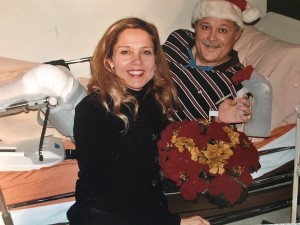
Although I don’t think I’m as bad as Mildred Ratched, I must confess that I possess no aptitude for medical practices. I have a queasy stomach and am rather lacking on the virtue of patience. Therefore, caregiving was definitely not at the top of my list for life tasks. Yet a decade ago, while caregiving for my husband following his third major surgery in eight months, I received an email addressed to “Nurse Ratchet.” The sender, a longtime friend had misspelled the sadistic caregiver’s name, but I knew instantly who she was referring to.
Despite my lack of nursing skills, like many other spouses and adult children, the lot of temporary caregiving had fallen on my shoulders. In light of this, I promised a registered nurse who really is a modern-day Florence Nightingale, that when I made it through my season of caregiving, I would compile a list of practical tips for others facing the daunting task.
Nurse Ratched’s Tips for Caregivers:
First, a caregiver must determine to maintain his or her sense of humor, be organized, and carefully prepare for this awesome responsibility. If possible, find a way to make the room where your loved one will be recuperating as dark as possible during daylight hours. This does not mean that you cannot shower your “sickie” with sunshine if they desire. But when pain or discomfort has kept them up during the midnight hours, window coverings will help simulate nighttime so they can rest. (This way, the caregiver can rest, too.) To avoid unnecessary expense, you can purchase used drapes to cover windows at a thrift store or garage sale.
Second, check with your physician’s office about the medical equipment that will be required. If a hospital bed is necessary, have it in place before your charge arrives home. Stock up on other supplies such as a walker, cane, crutches, shower seat, etc. and even prescriptions. Fill your cupboards and refrigerator with non-perishable groceries and bottled water since it might be quite a while before you will be able to leave your patient unattended. Prepare a journal to record administered medications, treatments, and even meals to avoid confusion.
Then there is entertainment to think about since the most difficult patient is a bored patient. Make sure a television with a remote can be readily viewed from the hospital bed. Plan a pre-op trip to your local library, to check out interesting books and make a must-see list for movies. When consulting with medical professionals, write down the questions you want to ask and request any resources that might be available for your situation. Don’t try to be superman or superwoman, but whenever possible ask for assistance from relatives, friends, or your church by communicating your specific needs.
 The caregiver has to get out and you can’t allow self-imposed guilt to keep you from taking care of yourself. Exercise, eat right, sleep whenever possible, and remember that “this too shall pass.” Most of all, forgive yourself when your attitude turns sour or when you get overwhelmed. Plus, forgive the world for moving full speed ahead and forgetting about your difficult situation. The flowers, cards, calls, and visits will probably trickle off rather quickly, since life goes on.
If you are a long-term caregiver like millions of Americans, finding a support group could provide a vital network to alleviate the stress and isolation this responsibility can create. But if you become severely depressed seek professional counseling. After the caregiving season ends, some caregivers also experience a temporary depression unsure of their next purpose. Hopefully, this won’t last long, because life has a way of continually presenting us with new tasks and adventures.
 Christina Ryan Claypool is an award-winning freelance journalist and inspirational speaker. She has been featured on CBN’s 700 Club and Joyce Meyer Ministries Enjoying Everyday Life TV show. Her latest book, “Secrets of the Pastor’s Wife: A Novel” is available on all major online outlets. Contact her through her website at www.christinaryanclaypool.com.



 “Public speaking ranks as our No. 1 fear, even outranking the fear of death, says Peter Desberg, PhD, professor of psychology at California State University,” according to
 Secondly, “Be prepared.” Absolutely, do a run-through for technical issues at the designated venue ensuring your technology is compatible with their technology. Plus, practice, practice, practice your presentation in front of a mirror, for a willing family member, or even for your dog. Also, make sure it fits into the allotted time slot. Thirdly, “Be confident.” Your knees might be shaking, your stomach might be rumbling, and you might be perspiring from terror, but employ the classic philosophy, “Don’t let them see you sweat.” Smile and act like “I’ve got this,” even if you feel like you don’t.
 “Engaging your audience” holds true whether you are speaking to a civic club, delivering a sermon, reporting for TV, or instructing a college class. Envision one person in the crowd, who sincerely needs to hear what you have to say. Then speak to that fictitious individual who probably really does exist out there. That way your presentation won’t seemed staged or emotionless.
 Christina Ryan Claypool is a freelance journalist and public speaker both in the secular and Christian communities. Her new Inspirational book,
  At this point they can’t process a lot of phone calls or texts, except a few from very close friends and family members. If you know details about the death, don’t post anything on Facebook or send emails out to contact lists until the family is talking openly and publicly about it. Give the family time and space to process what just happened.Sit tight for a day or two. Do nothing but pray at this point. Close friends and clergy should come by the house during this time, of course, because their comforting presence is invaluable. (A nearby neighbor brought over warm soup and fresh fruit that first day. Another close friend brought a large salad–and another gave us a wad of cash.)
 After a day or two, food in disposable containers, and practical items such as paper plates, toilet paper, tissues, and bottles of water are welcome and appreciated. The family is consumed with funeral and burial decisions, and the last thing on their mind is life’s basic necessities. If you are bringing food, consider foods that promote healing instead of foods that induce additional stress to their already fragile state of being. Examples would be vegetable or fruit platters, bean dips, and hearty vegetable and bean soups.
 Eventually, after the funeral is over and life is a bit quieter for them, visit in-person–but call first. If they don’t answer the phone, take no offense. They may just need space at that moment . . . or they may be embarrassed how messy their house has become in the aftermath of the tragedy. They may want company on-down-the-road. Try again a week or two later. Extend a listening ear without asking a lot of questions. Silence is okay. Just sit with them in their grief. Your presence is invaluable.
 On another note, if you or someone you love is contemplating suicide, please remember the devastation for those who love you is incomprehensible, instead please speak your a clergy or counselor or call the National Suicide Prevention Hotline at at 1-800-273-TALK or visit their website at
 When we were first married over fifteen years ago, my sweet husband would bring home a half gallon of one of my favorites. He thought I would be pleased, and was surprised when I told him that it was too tempting to keep ice cream in the freezer. I am not proud of the amount of ice cream that I can consume when craving comfort food. This confused him, because the poor man mentioned how he had come home on more than one occasion and found me eating ice cream, while watching a movie. Guilty as charged, but it was a chick flick, I’m sure. A girl can’t possibly watch a sappy romantic movie without a Hot Fudge sundae. As the famous song’s lyrics also say, “…Tuesdays, Mondays, we all scream for sundaes, Sis-boom-bah!”
 The holidays are over, and life is back to normal. For those of you who made New Year’s resolutions, maybe you’ve already broken some of them. I’m not saying this to criticize. At the beginning of January in decades past, making a resolution then breaking it a short time later often caused me some discouragement.
 or hurried email. Instead chatting with a true friend or loved one over a meal can be exhilarating. Don’t take your cellphone along, as the constant distraction will frustrate the flow of genuine conversation. When we are with folks who truly care for us, we somehow remember who we really are. The pieces of our life fit better, and we can bask in the camaraderie that comes only from authentic relationships, where we are accepted imperfections and all. Still, getting together can be especially tricky in this geographically mobile society where families and close friends are often separated by countless miles for employment opportunities.
 Lastly, there is a life lesson that involves “letting go.” It can be a spiritual breakthrough forged in prayer. Or an internal follow your heart and instincts moment that allows a person to sense when it’s time to cut your losses and venture out on a new path. It might be something as substantial as a job change or having the courage to end an emotionally destructive relationship. To let go and embrace change willingly is a challenging life lesson, because by nature most human beings are creatures of habit who hang onto familiar circumstances.
 There is a first time for everything. Whether it’s attending a prom, a kiss, buying a home, or watching our children take their first steps, these rites of passage are forever imbedded into our memory. Last winter, a few weeks before Christmas, I witnessed what appeared to be a toddler’s first experience with the simple phenomenon of Christmas lights. I was pretty low on holiday spirit and not looking forward to all the work that the preparation for the season would necessitate. Then just before sunset, I observed a neighbor man stringing Christmas lights with his little boy looking on.
 I happened to be walking by at the exact moment when the tiny boy’s uninhibited delight made me reassess my own lack of enthusiasm. It’s this gift that children give us of seeing the beauty and excitement in this world, because often adults take so much for granted. We get buried in the day-to-day struggle, the hectic pace, and the tedium produced by aging, forgetting that there is so much wonder constantly surrounding us.
 Christina Ryan Claypool is a national Amy award-winning freelance journalist and inspirational speaker. She has appeared on Joyce Meyer Ministries Enjoying Everyday Life TV program. Contact her through her website at
  According to Project: Time Off,
  Christina Ryan Claypool is an author and an inspirational speaker. Contact her through her website at
  Did you hear the joke about the little boy who came home from a birthday party, and his mother asked him,
 Probably most people reading this column are pretty good at common etiquette. Still, it’s becoming acceptable to bemoan a hectic schedule as ample apology for dismissing social graces, but think about the legacy this creates. If we’re too busy to put our phone down to listen when interacting with others, our children and grandchildren are learning not to give others their full attention as well.
 Christina Ryan Claypool is a freelance journalist and inspirational speaker. Contact her through her website at